About the Project
Siren
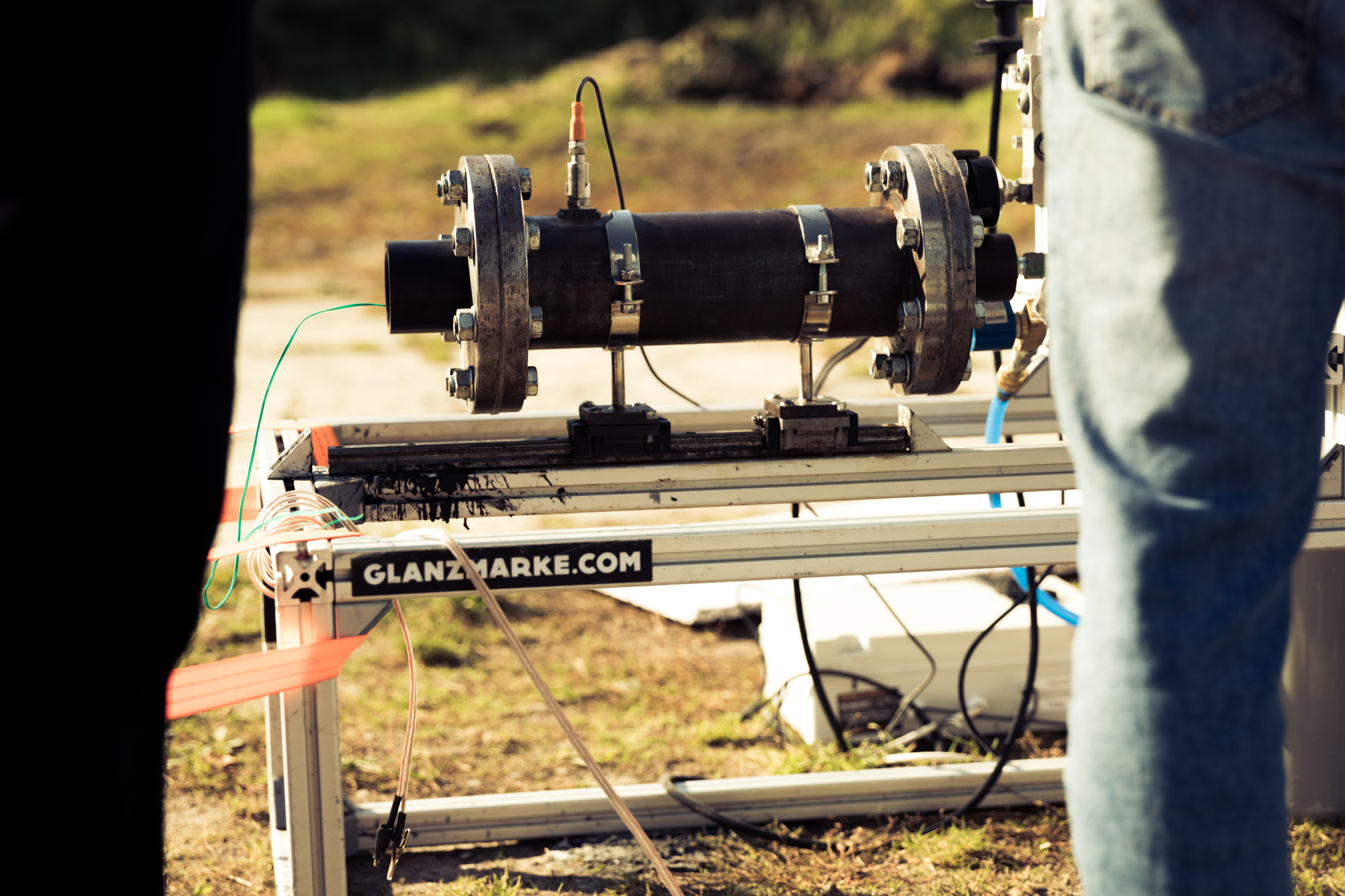
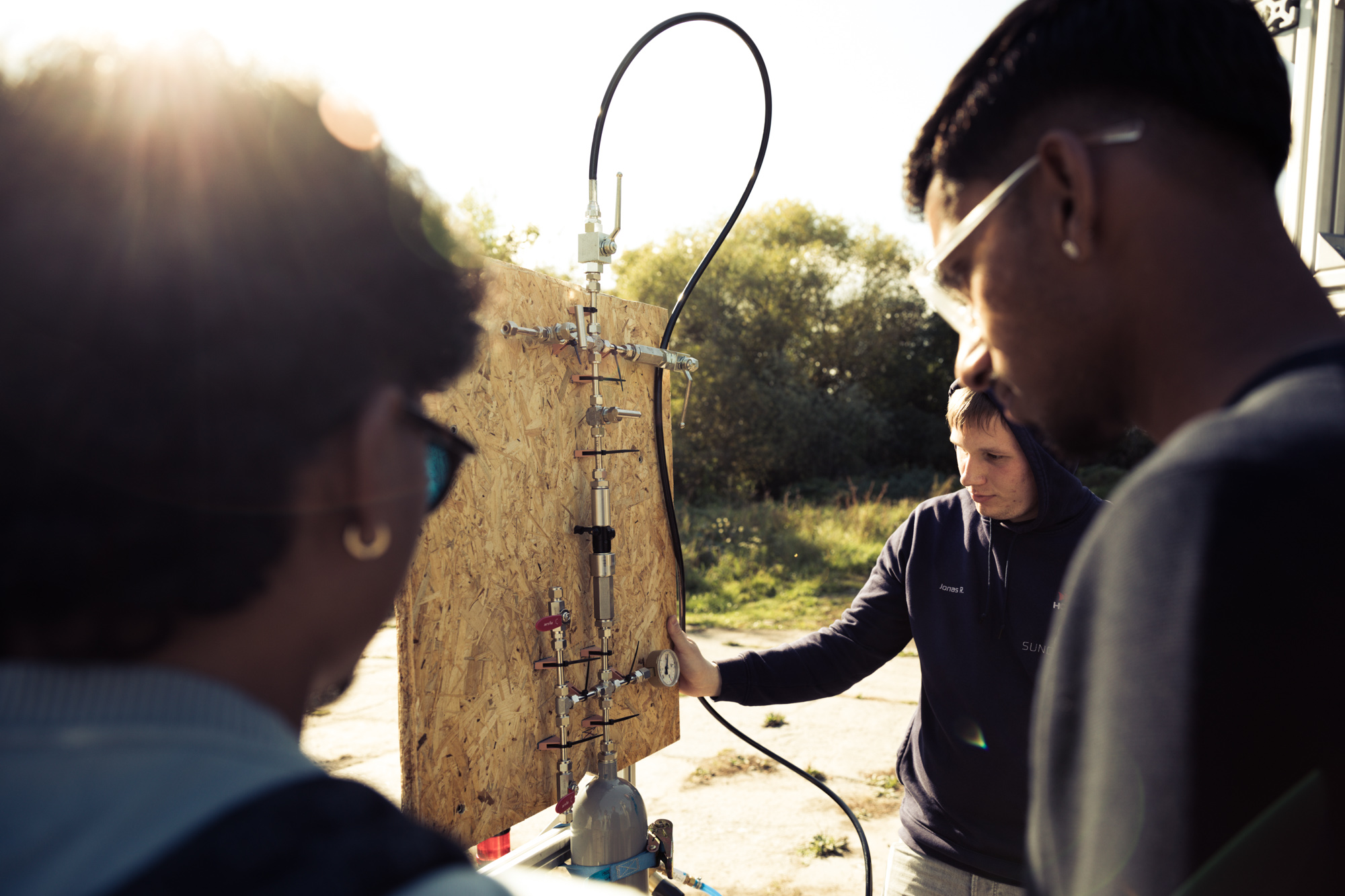
The Fortuna mission is SUNDSPACE’s first major step toward the stars. With “SIREN,” the team’s first rocket, SUNDSPACE aims to gain a foothold in rocket and aerospace research. Its propulsion unit consists of a custom-designed hybrid engine. In such an engine, a liquid oxidizer is typically guided from the tank system through a solid fuel structure.
The solid fuel structure is made of a carbon-based fuel (in our case PE, HTPB, or paraffin). The decision to use nitrous oxide was particularly easy, as it is non-toxic, can be stored in a liquid state at room temperature, and only becomes highly reactive after decomposing into oxygen and nitrogen. This ensures safe handling of the engine and the oxidizer, as self-ignition or uncontrolled combustion can be ruled out. The engine currently under development must, of course, be mounted in a suitable frame. A semi-modular framework will serve as the mount, which can be slid into the outer skin made of fiber composites or sheet metal. To stabilize the rocket during flight, we will equip it with a total of 8 fins: 4 passive fins at the bottom to prevent the rocket from tipping, and 4 active fins that can actively control the rocket’s rotation. Finally, the rocket must land safely back on the ground. For this, we will initially use a classic parachute system consisting of a small drogue parachute and a large landing parachute. We hope that our rocket will not only provide insights into aerospace engineering but also potentially make a small contribution to the research of hybrid engines or other rocket systems.
Parachute
The parachute system of our rocket, developed for the EUROC competition, plays a crucial role in the safe recovery of the payload. After reaching the planned flight altitude of 3000 meters, the two-stage parachute system is deployed. First, a smaller drogue parachute ensures stabilization and slows the descent. At an altitude of about 500 meters, the main parachute opens to guarantee a soft landing for the rocket. The entire system has been carefully calculated and tested to ensure both the structural integrity of the rocket and the safety of the payload.
Electronics
The on-board electronics of our rocket, used in the EUROC competition, are a central component for a successful mission. They include a flight computer system responsible for controlling and monitoring all critical processes. This includes collecting and recording flight data, deploying the parachute system at the correct phases, and activating safety systems in an emergency. Additionally, various sensors such as altimeters, accelerometers, and GPS modules are integrated to provide precise real-time data. This information is used both for control during flight and for later analysis. The electronics were specifically developed and programmed to function reliably under the extreme conditions of a rocket flight.
Engine
The engine of our rocket, developed for the EUROC competition, is the heart of the mission. It is a solid-fuel engine that has been carefully selected and optimized to bring the rocket to the planned altitude of 3000 meters. The engine provides the necessary thrust to carry the rocket safely through the various phases of flight, from launch to reaching maximum altitude. Special attention was paid to thermal stability and efficient fuel combustion to ensure steady acceleration and an optimal trajectory. The engine design and material selection were intensively tested to withstand extreme conditions while ensuring the safety of the entire system. Furthermore, the engine was designed to integrate seamlessly into the overall rocket structure, offering maximum performance with minimal weight.